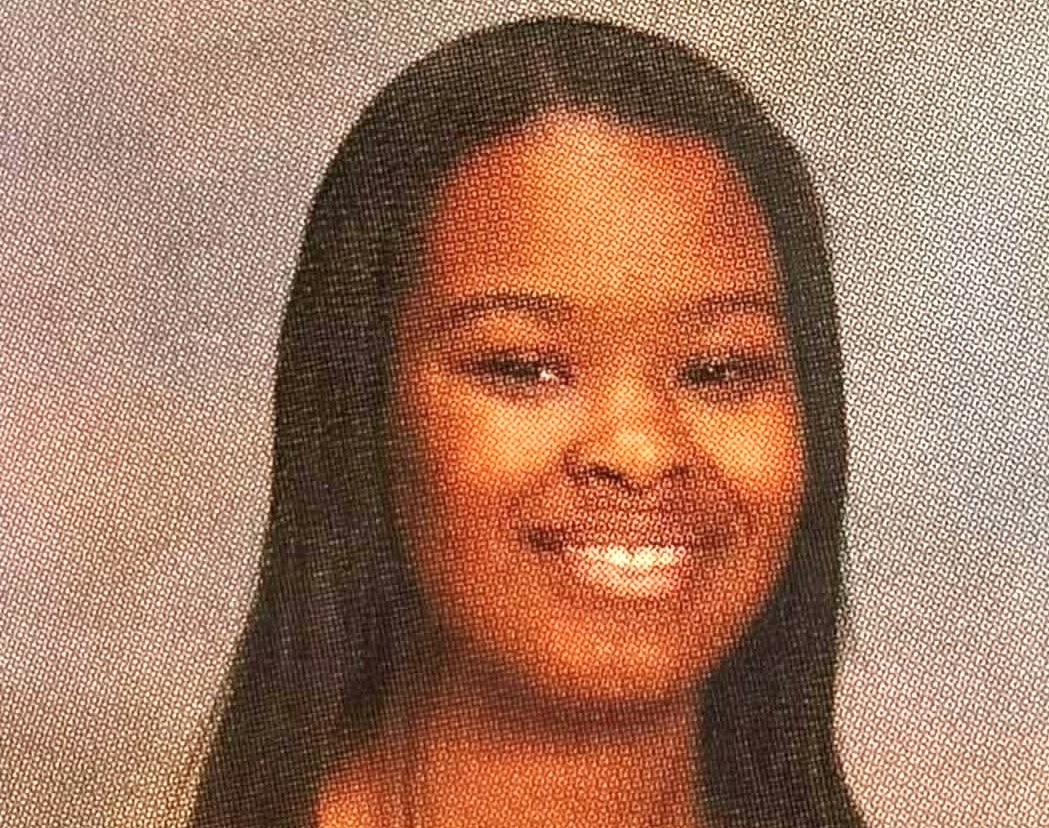
Daaiyah Heard
Columbus High School
Class of 2007
Columbus, Mississippi
Terry High School Teacher
2017-2023
Terry, Mississippi
I am a proud product of the Columbus Municipal School District, but I know the effects, consequences, and impacts of former segregation academies well into the 2000s and present day. If you are in a community that where an academy exists, you are touched by its pull, even as a nearby public school student or teacher. I have been.
To provide some background, the small town of Columbus, Mississippi had several elementary schools. Fairview Elementary, the school I attended, had a population that was roughly 60 percent Black students and 40 percent white students. From there, we went on to Hunt Intermediate (fifth through sixth grade). The population may have shifted some, but I still remember seeing most of my friends, white and Black.
But by the time we entered Lee Middle School (seventh through eighth), something was different. I cannot fully explain what prompted it, but I remember the moment in my body before I can explain it in words. I was wearing the dreaded navy-blue collared shirt and khaki pants that day. I was in eighth-grade history class. I turned left. I turned right.
And I blurted out, “Where is Sarah?” Please note, I had not seen Sarah since sixth grade, so it was not as if she was absent on a random Tuesday. Derrick, a Black classmate, kept taking notes and responded, “She went to that white folks’ school.”
Immediately, I knew. Heritage Academy.
We all went on to Columbus High School, which was predominantly Black, maybe an 80/20 split. Sarah (a pseudonym) never really came to mind again. Not until I became a teacher. myself.
It was the year 2020, and I was in my third year as a social studies teacher at Terry High School in Terry, Mississippi. I received a transfer student who struck me as very intelligent and applied himself in my class. One day, he walked in wearing athletic gear from Jackson Academy, one of the state capital city’s legacy segregation academies.
I asked him, “You came from JA?” He looked at me, almost disappointed. I am not sure why the look of disappointment came across his face. Maybe it was my tone when I questioned him, or maybe the phrase, “You’ve got to be kidding me,” was written all over my face, and said, “Yeah, I was there to play basketball.”
Interesting, I remember thinking. Black boys are seen as mere athletes and not recognized for their academic capabilities; once society has used them for their bodies, they are no longer deemed useful. Here I was confronted with what others may have discarded once the game was over, but I saw him in the fullness of who he was.
The next school year, I had Terry High’s star basketball player in my U.S. History class. I pulled him aside and said, “Hey, what’s going on? I would love for you to participate more.”
Before he could answer, one of his classmates spoke for him as if he were his spokesman: “Ms. Heard, that man is about to transfer to play basketball at Jackson Academy.”
Just like that, I thought back to my high school and the disappearance of Sarah again.
Former segregation academies—some now renamed Christian private schools–have left me with more questions than answers. These bastions of opposition to Alexander v. Holmes still had a way of snatching people from me, my friends, and my students. To this day, I do not understand why public schools are not seen as systems capable of providing a “quality education,” and I question who gets to define quality in the first place.
At its core, the answer is only one thing—race.
There was a time when public education was understood as sufficient for white children within white communities. But in the early 2000s and now, no one can tell me how or when that system lost its value. I want to give William J. Simmons, head of the white-supremacist Citizens’ Council, credit for speaking his truth in his response to the Brown v. Board decision. In 1959, he stated: “Should school closure become necessary…a satisfactory system of white private schools would be quickly devised.”
That’s pretty straightforward to me.
Often, I reference Lee Atwater’s “Southern Strategy” as ingenious. He may have given it a name, but its logic was already in motion long before. The strategy gained its clearest expression in the aftermath of April 4, 1968. Dr. Martin Luther King Jr. was not the Movement itself, but I argue he personified it. In that sense, he was “The Problem.” When he was assassinated, there was no longer a need for figures like Governor John Bell Williams or William J. Simmons to push back directly against the Movement’s demands of school integration. The Problem was no longer publicly centered. The focus shifted from confronting the Problem to addressing the audience, using a discourse that spoke only to them.
Fast forward to Atwater’s infamous Southern Strategy quote: “By 1968, you can’t say ….” I argue they no longer needed to. The coded language of “quality education” came to implicate anything non-White or seemingly non-Christian, despite the supposed “wall of separation” between church and state, as being outside the norm. This discourse spoke directly to certain white audiences because its purpose was to provide them with the assurance that “The Problem” was no longer there, and to reinforce or reinvent the standard. And when that discourse takes hold, it ceases to be theoretical; it becomes a lived reality, an identity and belief system that delineates who is understood as capable of learning or teaching, for that matter.
Although Black children can be successful products of the public school system and Christians, their public education is often framed as less than because it is shaped by the assumption that their presence does not align with “quality.”
No one can persuade me otherwise. I understand how Blackness functions as a form of social deficit in this country. Kevin Kruse, in White Flight: Atlanta and the Making of Modern Conservatism, detailed that when a Black family moved into a predominantly white neighborhood during the 1960s and 1970s, property values declined because of Black people’s presence. Black folks have long been positioned as less than human and never as the standard. I am not up to debate whether education is about race. It is.
Let me be clear: if you taught or attended these schools, I am not here to accuse you of racism or of being a racist. I want that to be understood plainly. Especially if you were a student, that decision may have been beyond your control. Neither am I here to assuage guilt.
What I am here for, however, is to hear your story if you attended one of the thousand-odd legacy segregation academies in the South. I’m interested due to my own Columbus school experience with disappearing whites, certainly. I’m even more interested, though, because of my current academic work. My doctorate dissertation topic centers on academy history. I’d like to hear about your experiences, whether good or bad. I am specifically seeking alumni and educators in these private schools between 1970 and 1995. All other alumni are welcome to share as well.
That is the space I am working within as a doctoral student at the University of Mississippi. I’m collecting and honoring these stories for my dissertation. All participants remain anonymous unless specified by the participant. Let me be clear. I am not a journalist. This is not a gotcha moment. My questions are not rooted in curiosity alone, but in a need to understand how you navigated those spaces. I am asking for clarity and believe your experiences are important history, worthy of inclusion in the narrative of U.S. history.
And I am still trying to understand what has been taken or what has shifted in the two generations plus since academies formed across the South and why. Maybe then I can make sense of where Sarah went—and why my star basketball player student ended up at Jackson Academy.
If you are an alumnus or educator of a former segregation academy/private school between 1970 and 1995 and are willing to share your experiences anonymously, you may contact me at dheard1@go.olemiss.edu. You may also contact my dissertation chair, Dr. Ellen Foster, at ejfoster@olemiss.edu.
I hope you’ll consider doing so.
Daaiyah Heard is a Columbus, Mississippi native, now a doctoral candidate at the University of Mississippi. She was previously a Terry High School social studies teacher in Terry, Mississippi.. She hopes to hear from alums of southern legacy segregation academies. Email dheard1@go.olemiss.edu
Great read classmate… So proud of you
Very well written. This is a truly understudied pipeline of education evolution in the South. I look forward to the completed product and wish you well on the journey. Great work, so proud of you!